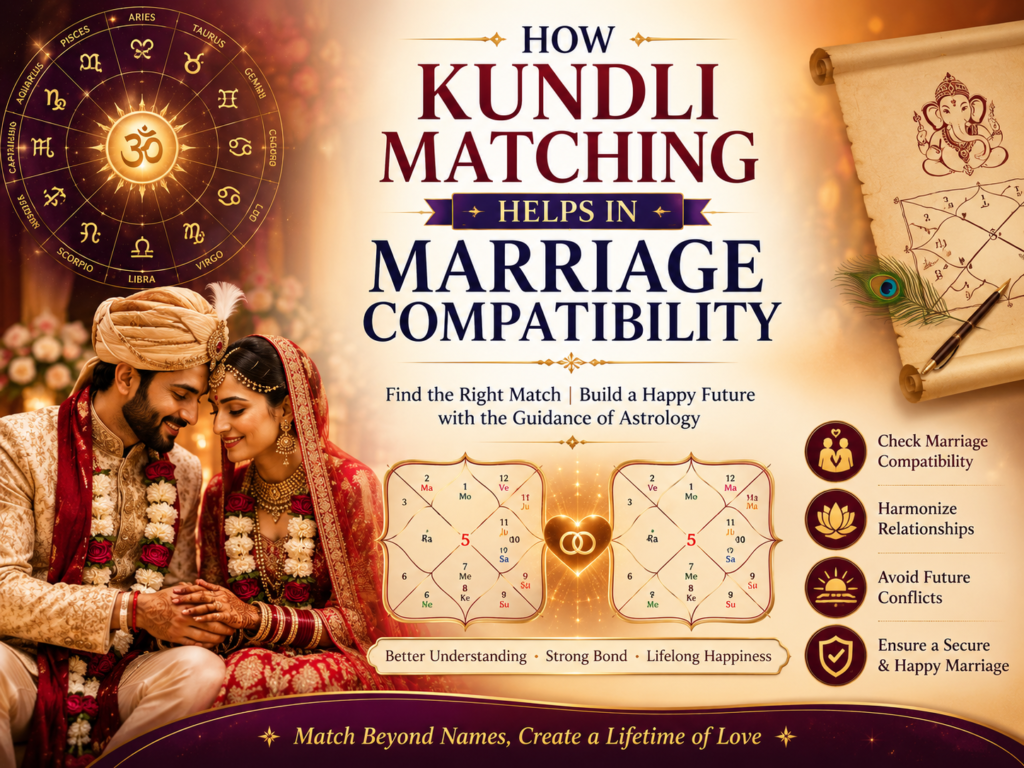
Marriage is not just a social event -it is the beginning of a shared life, built on trust, emotional understanding, and mutual growth. In India, families have relied on kundli matching for centuries before finalizing a marriage alliance. And despite the changing pace of modern life, this ancient practice remains remarkably relevant.
Not because of blind tradition. But because it works.
When done correctly, kundli matching provides a detailed picture of two people’s emotional temperaments, life values, health patterns, and long-term compatibility. It is not about finding a perfect match it is about understanding the match you already have, or the one you are considering, in a much deeper way.
What Is Kundli Matching and Why Does It Matter?
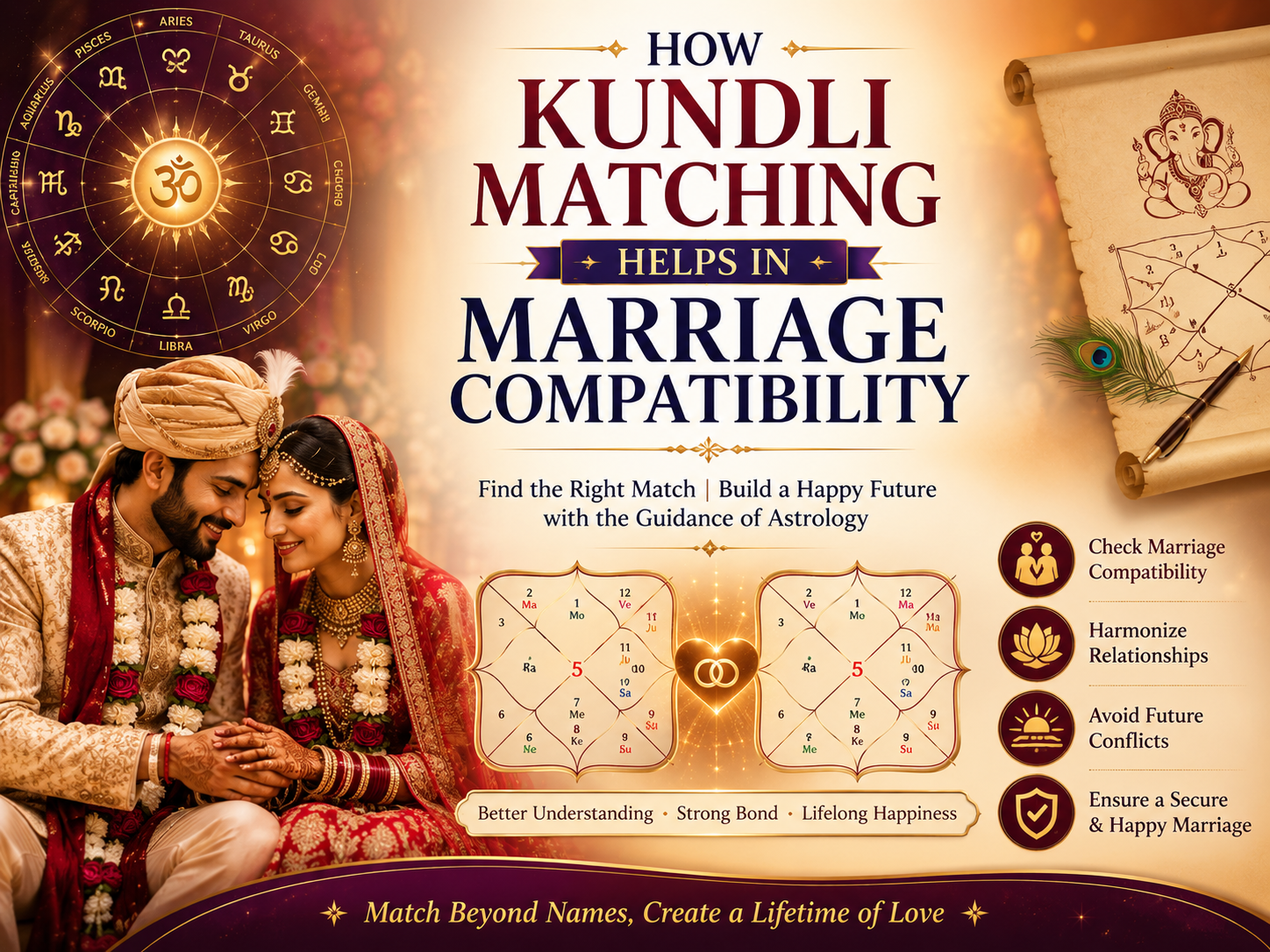
Kundli matching, also known as kundli milan or horoscope matching, is the process of comparing two individuals’ birth charts to assess their compatibility for marriage. In Vedic astrology, a birth chart called a Kundli is a detailed map of the sky at the exact moment of a person’s birth. It captures planetary positions that influence personality, emotional nature, health, career, and relationship patterns.
When two Kundlis are compared, astrologers examine how well these planetary energies complement or conflict with each other. The goal is not to find identical charts complementary differences are often healthier than mirror similarities. The goal is to understand the nature of the bond and identify areas that may need conscious attention.
Marriage compatibility through Kundli is assessed across multiple dimensions, making it far more nuanced than most people realize.
The Ashta Koota System – 36 Points of Compatibility
The most widely used method in kundli milan is the Ashta Koota system a framework of eight compatibility categories that together carry a total of 36 points. Here is what each category reveals:
1. Varna (1 point) -Spiritual and psychological compatibility; reflects whether both partners share similar life values and purpose.
2. Vashya (2 points) – Emotional influence and mutual attraction; indicates the natural pull and respect between the two people.
3. Tara (3 points) -Health and longevity compatibility; examines whether the stars support long-term well-being for both partners in the marriage.
4. Yoni (4 points) – Physical and intimate compatibility; reveals the nature of the couple’s personal chemistry and emotional closeness.
5. Graha Maitri (5 points) – Mental compatibility and friendship; this is one of the most important categories, as it governs intellectual harmony and mutual respect.
6. Gana (6 points) – Temperament match; assesses whether both partners are emotionally aligned in their natural disposition – calm, energetic, or spiritual.
7. Bhakut (7 points) – Financial stability and family harmony; examines the couple’s combined ability to build a stable and prosperous home together.
8. Nadi (8 points) – Health and genetic compatibility; the highest-weighted category, it plays a significant role in determining the couple’s overall physical well-being and the health of future children.
A score of 18 or above out of 36 is generally considered acceptable for marriage. A score of 24 or above is considered good. However, experienced astrologers always look beyond the number the quality and context of each koota matters as much as the total score.
What Kundli Matching Reveals Beyond the Score
This is where marriage astrology guidance becomes genuinely valuable. The Ashta Koota score gives a broad compatibility overview, but a thorough Kundli analysis goes much deeper.
Mangal Dosha (Mars Affliction) One of the most discussed factors in Indian horoscope matching is Mangal Dosha – a condition where Mars is placed in certain houses of the birth chart. It is believed to bring aggression, impulsiveness, or dominance into a marriage. When only one partner has Mangal Dosha and the other does not, it can create an imbalance. Matching both charts for this factor and understanding whether it cancels out is a critical part of any serious Kundli analysis.
Navamsa Chart (D9) Analysis The Navamsa chart is considered the most important divisional chart for marriage. While the main birth chart shows the overall life path, the Navamsa reveals the true nature of a marriage after the initial phase of romance settles. Astrologers experienced in marriage compatibility assessment always study both charts together for a complete picture.
7th House and Venus Examination The 7th house governs partnership and marriage directly. Venus rules love, romance, and emotional affection. When these are well-placed and unafflicted in both charts, the couple tends to enjoy warmth, physical harmony, and mutual appreciation. Afflictions here are not dealbreakers but they do signal areas that will need deliberate care and communication.
Dasha Compatibility Two people may be individually compatible but entering very different life phases at the time of marriage. Dasha analysis examining the planetary major periods each person is running helps determine whether the timing of the marriage itself is favorable for both partners.
Common Misconceptions About Kundli Milan
Many people either dismiss kundli matching entirely or follow it too rigidly. Both extremes miss the point.
“A low score means the marriage will fail.” Not true. A low Ashta Koota score simply highlights areas that will require more patience and conscious effort. Many deeply happy marriages exist between couples whose charts scored modestly on traditional scales.
“A high score guarantees a happy marriage.” Also not true. Kundli matching reveals compatibility potential but effort, communication, and genuine respect are what actually build a lasting marriage. Astrology supports good decisions; it does not replace personal responsibility.
“Kundli matching is only for arranged marriages.” Many couples in love marriages also consult astrologers for kundli milan not to get permission, but to gain clarity about the nature of their bond and understand each other more deeply.
How to Get the Most From Kundli Matching
If you are considering horoscope matching before marriage, here is how to approach it wisely:
- Provide accurate birth details – date, time, and place of birth for both partners. Even small differences in birth time can change chart readings significantly.
- Consult an experienced astrologer rather than relying solely on automated online tools. A good astrologer brings context, nuance, and lived expertise that a calculator cannot replicate.
- Use the reading as a guide, not a verdict. Let it inform your conversations with your partner and family – not replace them.
- Ask your astrologer about remedies for any identified challenges. Most astrological challenges have corresponding practices that help couples navigate them with awareness.
Conclusion
Kundli matching at its best is not about finding a flawless partner or following tradition without question. It is about entering one of life’s most significant commitments with genuine insight understanding who your partner is at an energetic and emotional level, and what the journey ahead may look like.
In a world of fast decisions and surface-level connections, taking time to understand deeper compatibility is not old-fashioned. It is wisdom.
Whether you are exploring an arranged alliance or seeking clarity about someone you already love, marriage astrology guidance through kundli matching offers a thoughtful, grounded way to move forward – with both your heart and your awareness fully engaged.
FAQs
Kundli matching is the process of comparing two birth charts in Vedic astrology to assess marriage compatibility. An astrologer examines both Kundlis across eight compatibility categories (Ashta Koota), checks for Mangal Dosha, analyzes the Navamsa chart, and reviews the 7th house and Venus placement. Accurate birth details like date, time, and place – are essential for a reliable reading.
In the Ashta Koota system, a total score of 18 or above out of 36 is generally considered suitable for marriage. A score of 24 or more is considered good. However, experienced astrologers do not rely on the score alone — the quality and context of individual kootas, Mangal Dosha status, and Navamsa chart analysis all form part of a complete compatibility assessment.
Kundli matching reveals compatibility patterns, emotional temperaments, and potential challenges — it does not predict happiness with certainty. A favorable match creates favorable conditions, but the success of any marriage ultimately depends on the mutual effort, communication, and respect of both partners. Astrology supports better decision-making; it does not replace human choice and commitment.
It is not compulsory, but many couples in love marriages choose to get their horoscopes matched for deeper understanding rather than approval. Kundli analysis can reveal hidden incompatibilities, help couples understand each other’s emotional needs, and identify life phases where extra patience may be needed. Many couples find it genuinely useful even when they have already decided to marry.
A low score or the presence of Mangal Dosha does not mean a marriage is impossible or doomed. Astrology provides remedies specific rituals, mantras, and lifestyle practices that help address identified challenges. In many cases, Mangal Dosha cancels out when both partners share similar placements. A qualified astrologer will always assess the full picture before drawing conclusions.